
There is still much to be optimistic about as a new year begins, but in 2025 bears are still lurking – just not in areas you might usually expect.
While there may be little evidence of bear markets in terms of equities, the performance of yield curves (with one notable exception) demonstrates distinct “bear steepening” tendencies which could pose the first big challenge for risk assets this year.
Controlled moves do not have to be disruptive for performance, but the longer they persist the greater the impact they may have on valuations of long-duration risk assets such as growth equities, unhedged fixed-rate bonds, private equity and infrastructure.
With duration risk properly managed, rising rates present opportunities for global credit investors to secure higher yields and mitigate the impact of tight credit spreads.
RBA – moving, fast or slow?
Recent economic data locally has intensified debate about the path of interest rates in 2025. Inflation continues to slowly trend lower, but after excluding temporary downward impacts remains above the desired range on an underlying basis.
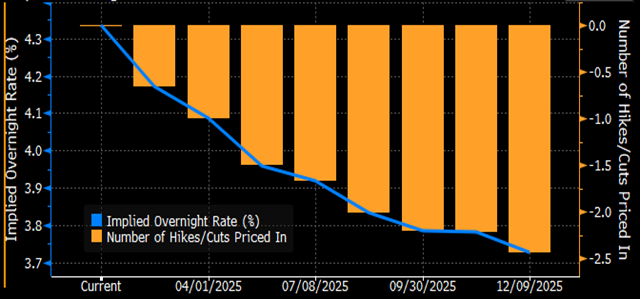
While recent data may show sufficient progress to warrant the start of an easing cycle as early as February, we believe the RBA will wait for more confirmatory evidence before adjusting policy rates. As Figure 1 shows, the market believes it will be at least April before any adjustments are made.
Figure 1: Australia cash rate expectations
Source: Bloomberg. Data as at 13 January 2025.
Beware the bear steepener
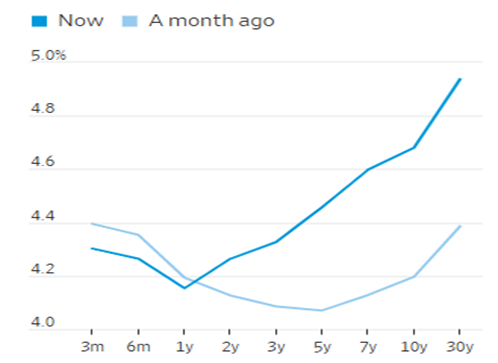
When it comes to yield curves, movements at the long end in the US have been notable in recent months. A rise in the 10-year yield towards 4.7%, 60 basis points higher since the presidential election, has largely been shrugged off by investors.
When interest rates rise this quickly, they can presage weaker investment returns. Many long-duration asset valuations are heavily reliant on this benchmark yield as their discount rate.
Duration exposed fixed income investors have had a difficult few years, but with further rate cuts now less certain and yield curves bear steepening, we expect headwinds to remain present over the year ahead.
Figure 2: US Treasury yield curve
Source: Factset. Data as at 13 January 2025.
Fiscal and growth challenges on the Continent
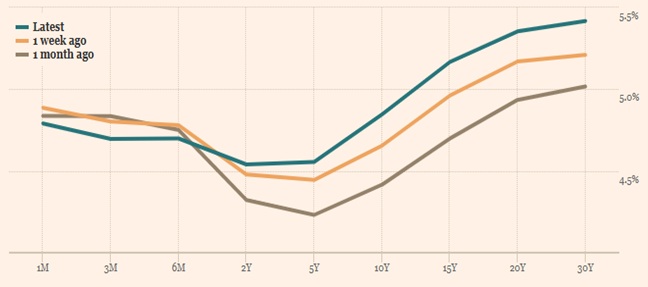
The bear steepening trend is not confined to the US. The UK has seen their 10-year gilt yield rise above the level that contributed to the end of former PM Liz Truss’ brief tenure. While the more globally focussed FTSE 100 equity index has performed in line with other major bourses, the domestically focussed FTSE 250 has been struggling since the UK election that brought the left-leaning Labour party to power.
Deep-seated fiscal challenges add to the gloomy tone descending over the UK, as bond investors seek greater compensation for lending money to the government for multi-year tenors.
Figure 3: United Kingdom yield curve
Source: LSEG, Financial Times. Data as at 13 January 2025.
Meanwhile, it is growth concerns that plague Europe as Germany has its turn at political instability, compounded by an industrial malaise driven by high energy prices.
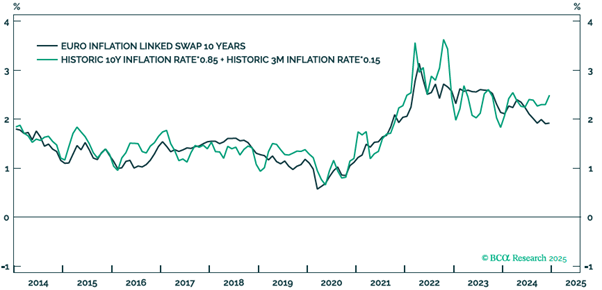
The ECB was one of the more active central banks last year in terms of monetary easing, but with inflation expectations now rebased higher (see Figure 4) and around the target of about two percent, the scope for further monetary accommodation has narrowed.
Moreover, other major European economies have their own political issues to address, and in the case of France limited headroom for additional fiscal expansion to spur economic activity.
Figure 4: European inflation expectations
Source: Datastream, ECB, BCA Research
China – bucking the trend
The trajectory for interest rates could not be more different in China. Pessimistic consumers, weighed down by an intractable property market, are not for turning regardless of the stimulus measures implemented to date.
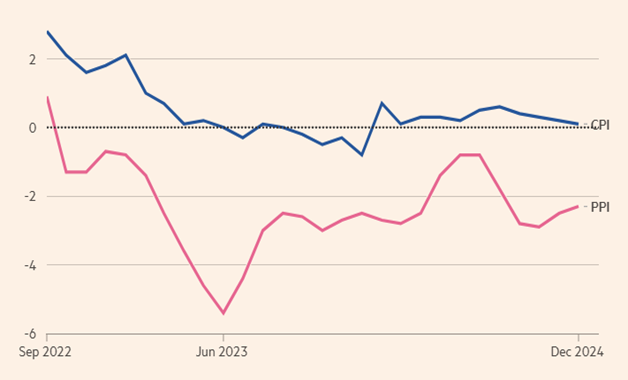
Gauges of consumer and producer prices present a clear and present danger of persistent disinflation or even deflation, a lethal mix in an economy that is saddled with significant debt in certain sectors such as local and provincial governments.
Figure 5: Chinese consumer and producer price indices (yoy change)
Source: National Bureau of Statistics, CEIC, Financial Times
Chinese authorities have so far relied on targeted but piecemeal measures to revive growth prospects. A fragile economy has meant these efforts have not yet had much success. For example, youth unemployment remains stubbornly high, and indebtedness at the local and regional level stymies the ability of the central government to deploy stimulus efficiently.
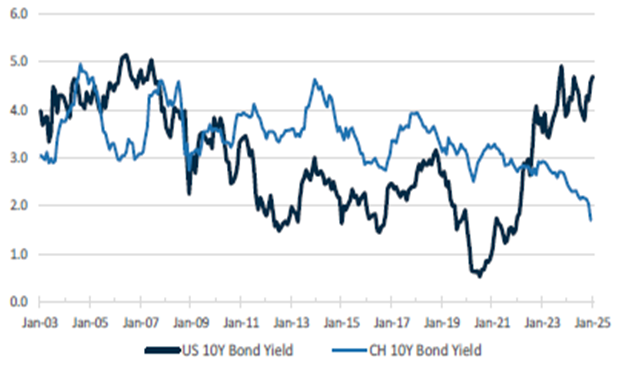
Bond investors are becoming impatient and concerned with deflation, buying government bonds with gusto. Indeed, benchmark 10-year yields have been driven down to near-record lows in a scene reminiscent of the years following the implementation of quantitative easing in Western economies.
The comparison with US 10-year yields is striking. While talk of the Federal Reserve having already reached its terminal rate in this easing cycle is supporting both short and long yields, bonds look to be the only option for Chinese investors even as yields fall.
Figure 6: China and US bond yields
Source: Datastream, Ord Minnett
Stay nimble but disciplined
While Daintree is not primarily a sovereign bond investor, nor do we invest in China, this article highlights the current dynamism of global interest rate markets. For benchmark-unaware, global credit investors like us, a market set-up like this evokes a sense of optimism tempered by a healthy dose of realism. With the right approach, all the elements are present for another productive year.
In our view, higher interest rates present opportunities to investors like Daintree that are:
- experienced enough to know that they will cause turbulence along the way,
- equipped to manage the risks of a higher interest rate environment, and
- patient enough to wait for the opportunities that properly compensate for the risks involved.
Daintree wishes all readers a safe, productive and profitable 2025!
Disclaimer: Please note that these are the views of the author Brad Dunn, Senior Credit Analyst and Portfolio Manager at Daintree, and are not necessarily the views of Daintree. Some small changes were made to this article, based on updated information. This article does not take into account your investment objectives, particular needs or financial situation and has been prepared for general information purposes only and must not be construed as investment advice or as an investment recommendation.